
Interlocking Garage Floor Tiles for a Modular, Designed Finish
A modular alternative to a poured coating — selected around your slab, layout, water and drain conditions, vehicles and a clearly defined tile product. Tiles are a covering, not a coating, and they do not repair the concrete underneath.
GaragIQ helps Indianapolis-area homeowners compare interlocking tile flooring with poured coatings using honest product details, real layout planning and a written scope before installation.
Modular layout · Slab review · Honest tradeoffs · Written scope before installation
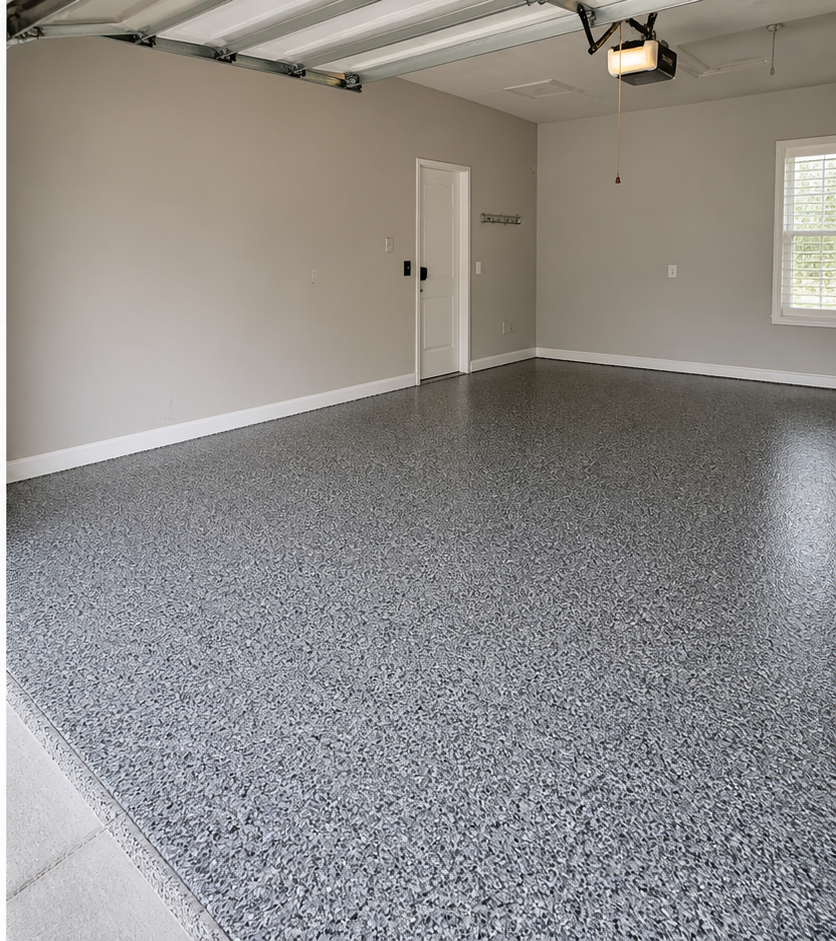
A configurable tile layout that sits over an existing stable slab — without a liquid-coating cure period.
Tile brand, material, pattern, color and layout are identified before installation rather than assumed from a category name.
Tiles are a covering — not a repair. The condition of the concrete underneath is reviewed and documented up front.
Vehicles, water, drains, thresholds, expansion clearance and cleaning are discussed alongside the pattern you want.
Interlocking tiles are a modular floor covering — not a coating.
Interlocking garage floor tiles are individual modular pieces that connect to one another and sit over an existing concrete slab. They are not bonded to the concrete the way a resinous coating is, and they do not repair, resurface or structurally improve the slab underneath.
Tile material, pattern, color and behavior vary by product. The actual tile system used on your garage — including the brand, material, pattern, color options, layout, edging and any manufacturer or workmanship warranty — is identified in the written proposal rather than implied by the category name.
Individual tiles connect together and can be planned into a designed pattern across the garage.
Tiles are installed over the existing concrete rather than bonded to it like a resinous coating.
Because the system is not a poured coating, there is no resin cure schedule — but planning and installation are still required.
Material, pattern, drainage, load tolerance and warranty depend on the specific tile product GaragIQ confirms for your project.
Interlocking tiles are a modular flooring alternative, not a coating system and not a repair to the concrete slab underneath. Before installation, GaragIQ should identify the selected tile brand/product, material, pattern and color availability, layout and edging, expansion and drainage considerations, underlying-slab limitations, cleaning guidance, vehicle/use expectations and any manufacturer or workmanship warranty applying to the approved project.
Some homeowners genuinely prefer a modular floor.
Tiles are not better or worse than a poured coating — they are a different direction with different tradeoffs. Homeowners who consider tiles often value pattern flexibility, modular replacement potential and the absence of a liquid-coating cure step in the garage.
Tile colors can be arranged into a designed layout across the garage rather than a single uniform finish.
Individual tiles can typically be removed and replaced; realistic continued color/pattern availability is part of the conversation.
Because there is no resin to cure, the project sequence is different from a coating installation.
Some homeowners value a less permanent floor direction for personal or property reasons.
Where the slab is not appropriate for a resinous coating, tiles are sometimes considered as an alternative — though they do not repair the slab.
A planned tile layout can support a curated garage look when the product and pattern fit the space.
Is a modular tile floor the right direction for your garage?
Tell us about the slab, how the garage is used and the look you have in mind.
A tile floor is a visual covering, not a slab repair.
Tiles can visually cover most of the slab, but the concrete underneath continues to behave the way it already does. Significant cracks, spalls, unevenness, contamination and moisture conditions should be reviewed before deciding whether tiles are an appropriate direction.
Tiles obscure the appearance of most of the slab surface from view once installed.
Cracks and joints in the concrete underneath are not bonded, sealed or structurally repaired by tiles.
Surface damage is not corrected; tiles bridge over but do not fix the underlying defect.
Slab moisture is not resolved by tiles. Significant moisture concerns should be evaluated separately.
Pronounced slope, heave or unevenness can affect how tiles sit, lock and wear; the slab condition is reviewed up front.
Oil or chemical contamination on the slab can affect long-term suitability and is part of the project conversation.
A tile floor behaves differently than a poured coating around water.
Wet tires, snow melt, road salt, washing and floor drains all need to be considered before approving a tile direction. Different tile products handle water differently — some allow water to pass between or beneath tiles, others do not — and the right plan depends on the selected product and your garage.
Indianapolis winter vehicles bring in significant water; cleaning behavior and drying expectations vary by tile product.
Existing drains and floor slope direction are evaluated and tile layout is planned around them.
Some tile products allow water to travel between or beneath tiles; expected behavior is described per the selected product.
Realistic cleaning guidance is provided based on the actual tile product rather than a generic claim.
Salt, oil and fluid behavior is product-specific; published claims should be supported by manufacturer documentation.
Because tiles sit over the slab, trapped moisture has to dry; the appropriate moisture conversation is part of the proposal.
No tile direction should be marketed as waterproof, drain-friendly, slip-proof or compliant with ADA/OSHA by default. Water, drain and traction behavior is identified per the actual selected product and project, not by finish-style alone.
Layout planning is most of the difference between a good and bad tile floor.
Tiles are modular, but the garage is not. Expansion clearance, garage-door thresholds, transitions to other flooring, columns, drains, water heaters and cabinetry feet all influence the tile layout, cuts and edging.
Most tile systems require a planned clearance around the perimeter to allow for movement; the exact rule depends on the selected product.
The door threshold and weatherseal interaction is planned so the floor sits and seals correctly.
Exposed edges at openings to interior rooms or driveway are addressed with appropriate ramped edge or trim pieces.
Tile cuts around floor drains, columns and similar obstacles are planned in advance, not improvised on install day.
Water heaters, sump pits, utility platforms and similar elements may require thoughtful layout and access.
Stored items and cabinet feet behave differently on tiles; planning helps avoid point loads and drag damage.
Tile performance is product-specific — not a category guarantee.
Vehicle weight, tire heat, jack stands, lifts, motorcycle stands and heavy storage all interact with tile material and design differently. Realistic expectations and any warranty terms are anchored to the actual tile product being installed.
Daily vehicle parking, weight, tire heat and turning behavior are discussed against the selected product's documentation.
Point loads are handled differently by different tile products; lift, jack and stand use is reviewed before approval.
Cabinet feet, motorcycle stands, tool chests and similar items are part of the layout and load conversation.
Modular replacement potential depends on the product and continued color/pattern availability over time.
Any manufacturer warranty applies to the actual selected tile product and is provided in writing before installation.
Any GaragIQ workmanship terms are stated separately in writing, including covered scope, exclusions and claims process.
Universal hot-tire tolerance, fixed load ratings, immediate-drive instructions and decades-long manufacturer warranties are not published here as defaults. Each detail is confirmed for the actual offered tile product and supported in writing.
The workflow should reflect the actual tile product GaragIQ installs.
The workflow below describes a typical project structure for an interlocking-tile conversation. Specific layout, edging, slab review and return-to-use timing will be confirmed for your garage and stated in writing before work begins.
- 01Garage and Modular Finish Conversation
Discuss the garage size, current floor condition, vehicles, water/drain conditions, thresholds, storage and the modular look you are considering.
- 02Slab Review
Review visible cracks, joints, pitting, spalls, contamination, slope, drains and moisture concerns relevant to a tile covering.
- 03Tile Product Selection
Identify the actual tile brand/product, material, pattern and color availability GaragIQ can document for the project.
- 04Layout and Edging Plan
Plan the tile layout, expansion clearance, threshold transitions, drain cuts and edging direction for the specific garage.
- 05Written Proposal
State the selected tile product, layout, included slab review, exclusions, installation timing, vehicle/use expectations, cleaning guidance and any manufacturer or workmanship warranty terms.
- 06Approved Installation
Install the approved tile product according to the documented layout, edging and product requirements.
- 07Review and Handoff
Review the finished floor with the homeowner and provide care guidance, replacement-tile direction and written warranty/product information where applicable.
Universal same-day install, no-prep claims, immediate drive-on instructions, fixed half-day timing and decades-long manufacturer warranties are not published here as defaults. Each detail is confirmed for the actual offered tile product and project.
Tiles and coatings are different directions — not better or worse.
A poured coating bonds to the slab and presents as a single integrated surface; a tile floor is modular and sits over the slab. The right direction depends on the concrete, the way the garage is used and the look you want.
Designed layout, modular replacement potential and no resin cure step — at the cost of seams, edges and product-specific water/load behavior.
A bonded resinous finish that presents as one continuous floor and is typically more chemically and abrasion-resistant.
Tiles do not repair the slab; coatings require appropriate slab condition and preparation. Either way, the concrete is part of the conversation.
Vehicles, water, drains, thresholds, storage, look and budget all weigh into which direction fits — not a category-level winner.
A modular floor deserves clear written details.
Identify the actual brand, material, pattern and color availability rather than relying on the generic category name.
Show the layout, color arrangement, expansion clearance, threshold transitions and drain/obstacle cuts in writing.
Identify the perimeter, garage-door and transition edging direction for the selected product.
State the slab conditions reviewed and any limitations that may affect tile performance or appearance.
Discuss vehicles, tires, lifts, jacks, heavy storage, water, snow and cleaning expectations relevant to the selected product.
State expected installation time for the actual project rather than a universal same-day claim.
Provide cleaning guidance and realistic replacement-tile expectations for the selected product.
Provide the manufacturer warranty for the selected product and any GaragIQ workmanship terms — including covered scope, exclusions and claims process.
Ready to explore a modular tile floor for your garage?
Request an estimate centered on your slab, layout, water/drain conditions and a tile product we can explain in writing.
Interlocking garage floor tile questions, answered.
Compare tiles with poured coating directions.
Review every garage-flooring direction GaragIQ offers — tiles alongside poured coating systems.
Compare Garage Flooring OptionsDiscuss visible slab conditions, included review and limitations before approving any garage floor.
Explore Concrete EvaluationIf a bonded integrated surface is preferred, compare this poured coating direction.
Explore Polyaspartic CoatingsCabinetry, storage, lighting, car lifts and other garage improvements are not included within a tile floor estimate unless specifically requested and stated in the proposal.
A modular floor direction built on an honest scope.
GaragIQ is positioned to discuss garage-flooring projects across the Indianapolis metro, including Carmel, Fishers, Noblesville, Zionsville, Westfield, Brownsburg, Greenwood, Geist and Avon. Scheduling availability for a specific location will be confirmed during the estimate conversation.
Explore an interlocking tile floor for your garage.
Tell us about the concrete floor, how the garage is used and the modular look you are considering. GaragIQ can help you compare an appropriate flooring path and define the next step clearly.
Serving Indianapolis-area garage projects within GaragIQ's confirmed service territory.