
Concrete Repair and Crack Evaluation Before a Garage Floor Coating
A finished garage floor starts with an honest look at the concrete underneath. Visible cracks, pitting, spalls, old coatings and contamination can affect preparation, appearance and what a coating proposal should promise.
GaragIQ helps Indianapolis-area homeowners discuss garage slab conditions relevant to a floor-coating project, define eligible surface-repair or preparation scope where appropriate and identify concerns that may need separate professional evaluation before coating begins.
Evaluate the slab · Define included repairs · Understand limitations · Choose the floor system after the concrete is considered
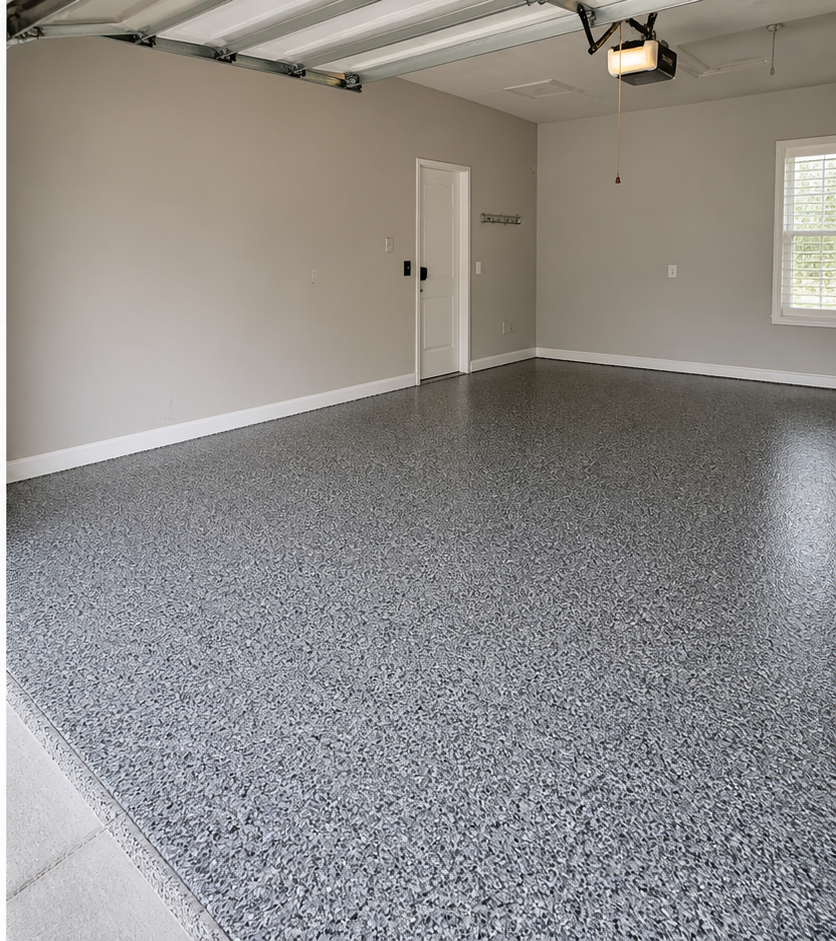
GaragIQ's concrete repair discussion is intended to address visible slab conditions relevant to an approved garage-floor coating project. It should not be represented as structural repair, foundation repair, slab leveling, settlement/heaving correction, waterproofing or a guarantee that cracks or movement will not recur. Conditions suggesting structural movement, significant displacement or ongoing water intrusion may require evaluation by an appropriately qualified professional before a coating project proceeds.
Visible floor conditions should be discussed before selecting a decorative coating direction.
Not every crack, joint, pit or spall should be treated the same way.
A coating-preparation repair is not automatically a structural or moisture solution.
Included preparation, repair, coating tie-in, exclusions and any warranty should be stated before work begins.
Surface conditions before coating, not an unsupported structural-repair promise.
A garage floor coating may require preparation or treatment of visible concrete conditions before the decorative finish is installed. GaragIQ should help homeowners understand which conditions are being addressed as part of the coating project, what the repair is intended to accomplish and what conditions remain outside that scope.
- Visible cracks relevant to an intended coating surface.
- Pitting or minor spall areas where treatment is appropriate to the coating scope.
- Existing coating or paint removal considerations.
- Visible stains or contamination that may affect preparation.
- Identifying control joints or movement-related limitations.
- Preparation and repair items included in a written floor-coating proposal.
- Coating-system compatibility after the actual products are confirmed.
- Structural slab repair.
- Foundation repair.
- Settlement or heaving correction.
- Slab lifting or leveling.
- Drainage or waterproofing.
- Moisture/vapor mitigation.
- Engineering diagnosis.
- Permanent elimination of cracks.
- Invisible repairs.
- Warranty coverage for future slab movement unless explicitly documented.
Some visible concrete surface conditions may be addressed as part of a floor-coating scope. Other concerns — especially displacement, heaving, settlement, recurrent water intrusion or suspected structural movement — may need a different qualified professional before a coating is appropriate.
A coating can improve a prepared floor, but it cannot change the nature of the slab.
Homeowners naturally focus on color, flake and finished appearance. The concrete underneath is just as important. Cracks, joints, surface damage, old coatings, contamination or moisture-related conditions can affect how the floor is prepared, whether repair work is included, how the finished coating may appear and what warranty exclusions are appropriate.
Visible floor damage or prior repairs may influence the finished look of a decorative coating.
The selected coating system should have a preparation plan appropriate to the existing concrete.
Eligible crack, pit or spall treatment should be identified in writing rather than implied through a general promise.
Some cracks or joints reflect movement, and movement may affect the finished coating later.
Repair products and coating products should be selected with compatibility and manufacturer instructions in mind.
Any repair- or coating-related warranty should disclose exclusions for future cracking, joint movement, moisture or underlying slab conditions where applicable.
A floor coating can improve the appearance of a properly prepared surface, but it does not erase the behavior of the concrete slab. Existing cracks, control joints or future movement may remain visible or affect the finished coating later, and limitations should be explained before approval.
Different slab conditions require different conversations.
A crack should be assessed in the context of location, width, displacement, apparent movement and the proposed coating. We avoid promising it will never return or be visible later.
Control joints are intentionally created to encourage movement and cracking along a planned line. How they are handled in a finished floor should be discussed clearly.
Movement joints may require a different approach than random surface cracks; not every joint can simply be coated over or permanently concealed.
Surface deterioration may affect preparation and appearance. Any patching or repair scope should state what is included and what limitations remain.
Prior coatings, paint or residue may need removal or may alter the preparation and final proposal.
Stains or contamination may affect coating suitability or surface-preparation requirements.
Repeated moisture, water intrusion or suspected vapor-related conditions may require separate evaluation before a coating-system decision.
Raised, sunken, shifted or significantly displaced areas may suggest concerns beyond coating preparation and should not be treated as a routine crack-filler repair.
Some concrete concerns need more than a surface-repair proposal.
A trusted contractor should be willing to say when a coating project may not be the first step. Certain conditions may indicate concerns outside the scope of a garage-floor coating preparation project.
If portions of the slab are sunken, lifted or visibly displaced, coating-preparation repair should not be represented as correcting the underlying cause.
Wide, displaced or actively changing cracks may warrant further evaluation before a decorative floor is installed.
Repeated water entry, drainage problems or moisture concerns may require investigation beyond a surface repair.
Cracking accompanied by wall movement, major displacement or structural concerns should be evaluated by an appropriately qualified professional.
Severe spalling, failed concrete or extensive deterioration may require a broader concrete-repair decision before any coating discussion.
GaragIQ should not represent a coating-preparation repair as correcting settlement, heaving, significant displacement, structural slab failure, foundation movement or ongoing water-intrusion conditions. If those concerns are present, an appropriate next step may be evaluation by a qualified concrete, foundation, drainage or engineering professional before a coating project is considered.
The repair product should match the condition and the coating plan.
The current appearance of a crack does not by itself identify the right repair material. Different products may be used for different crack, joint, spall or coating-preparation conditions. Fast-setting polyurea joint fillers are available in the marketplace for certain uses, while other repairs may require other material types or treatment decisions. GaragIQ should publish only the material, cure time and compatibility claims supported by the actual products it selects and the coating system it proposes.
Identify what is being addressed: crack, joint, pitting, spall, prior coating or another visible issue.
State the actual product or material only when confirmed for the project and supported by its technical instructions.
State the cleaning, routing/chasing, surface preparation or related steps only where they are actually included and appropriate.
Provide cure, shaving/grinding and coating-sequence timing only from the selected product/system requirements and actual project conditions.
Confirm that included repair products and the selected floor-coating system are compatible for the approved scope.
Explain future movement, crack or joint visibility, moisture, structural or other excluded conditions in the written proposal.
Repair materials, preparation procedures, cure times and coating compatibility depend on the visible condition, the products selected and the proposed floor system. GaragIQ identifies actual materials and applicable instructions before making public or project-specific performance promises.
From visible slab conditions to an accurate coating scope.
The workflow below describes a responsible structure for a pre-coating concrete evaluation. Specific preparation methods, products and return-to-use timing are confirmed for your project and stated in writing before work begins.
- 01Discuss the Garage and the Goal
Learn about the garage, existing concrete, visible concerns, how the space is used and which floor-coating directions the homeowner is considering.
- 02Review Visible Floor Conditions
Identify apparent cracks, joints, pitting, spalls, stains, prior coatings or other visible conditions relevant to the coating discussion.
- 03Identify Scope Boundaries
Clarify whether the concerns appear appropriate for a coating-preparation conversation or whether settlement, significant movement, water intrusion or other conditions should be evaluated separately first.
- 04Define the Floor and Repair Direction
If a floor-coating project is appropriate, identify the proposed coating direction, included preparation or repair scope, actual products to be confirmed and relevant limitations.
- 05Provide a Written Proposal
State included work, exclusions, preparation or repair treatment, coating-system relationship, project sequencing, care/use instructions and any warranty terms applying to the actual project.
- 06Complete Approved Preparation and Repair
Perform only the preparation and eligible repair work included in the approved scope using the selected product requirements.
- 07Install the Approved Coating System and Provide Guidance
Where coating installation is part of the approved project, complete the selected system and provide relevant care, return-to-use and warranty information included in scope.
Surface condition can affect any decorative floor direction.
Whether a homeowner is considering polyaspartic, epoxy, metallic, quartz or another floor direction, visible concrete conditions should be discussed before the finish decision is finalized. A floor may still be a strong candidate for a coating conversation, but the proposal should honestly address what lies beneath the finish.
Explore a product-specific coating direction after slab conditions, preparation, cure/use and warranty expectations are defined.
Explore Polyaspartic CoatingsA highly decorative metallic finish may make appearance expectations especially important when repairs or slab irregularities exist.
Explore Metallic CoatingsA textured quartz direction may require separate discussion of use, finish texture, preparation and product system.
Explore Quartz SystemsCompare an epoxy direction honestly based on slab, system, sunlight, cure/use and written terms.
Explore Epoxy CoatingsA surface-repair discussion does not itself include a finished coating, and a coating estimate does not include all repair or slab-correction needs unless each item is stated in the approved proposal.
A reliable coating proposal should explain the concrete conditions it is built around.
List relevant cracks, joints, pitting, spalls, prior coatings, contamination or visible moisture concerns.
Clarify if the condition appears appropriate for included surface treatment or if separate evaluation is recommended first.
Identify actual included work rather than general claims about repairing all cracks.
State the selected material/product and applicable instructions only after confirmed.
Explain any limits involving cracks, joints, future movement or repair visibility.
Identify how included preparation/repair connects to the proposed finish system.
State scheduling or coatability expectations based on the actual products and conditions rather than a universal minutes/same-day promise.
State structural, settlement, heaving, moisture, water intrusion, future movement, prior contamination or other limits where applicable.
Provide written terms only if a real warranty exists, including repair-area and crack/joint exclusions.
Concrete repair and garage-floor coating questions, answered.
Better floor decisions begin with accurate conditions.
GaragIQ is positioned to discuss garage-floor coating and related visible concrete-condition inquiries across the Indianapolis metro, including Carmel, Fishers, Noblesville, Zionsville, Westfield, Brownsburg, Greenwood, Geist and Avon — within our verified service territory.
Discuss the floor condition before choosing the coating.
If your garage floor has visible cracks, pitting, spalling, an old coating or other surface concerns, GaragIQ can help begin the conversation around what may affect a floor-coating project and what should be defined before work is approved.
Serving Indianapolis-area garage projects only within GaragIQ's verified service territory.